
Loading...
Serving Lancaster, CA and surrounding areas(661) 952-4736
Lancaster Insulation Company serves Acton, CA with attic air sealing, spray foam insulation, and whole-home insulation upgrades for the community's rural acreage properties in Soledad Canyon. Acton sits between the Sierra Pelona and San Gabriel Mountains in an unincorporated stretch of Los Angeles County where homes range from 1970s-era ranch houses to newer builds on multi-acre equestrian lots. Our crew has served northern Los Angeles County since 2022 and holds a valid California C-2 Insulation and Acoustical Contractor license.
Acton is an unincorporated census-designated place in northern Los Angeles County, settled in Soledad Canyon between the Sierra Pelona Mountains to the northwest and the San Gabriel Mountains to the south. The community traces its origins to 1887, when gold miners working the Red Rover Mine established the first permanent settlement here. Today, its 2020 Census population of 7,431 is spread across more than 39 square miles at a density of roughly 189 persons per square mile — making it one of the more sparsely populated corners of LA County.
Most Acton properties sit on parcels large enough for horses, and the equestrian character of the community is visible throughout. Homes range from 1970s and 1980s ranch-style structures built during the early freeway commuter era to newer builds on 2-to-11-acre lots along the canyon roads. Because Acton has no city government of its own, all building permits, zoning decisions, and code enforcement run through Los Angeles County rather than a local city hall. The community is also home to Bloom Ranch, a historic stone-house property dating to 1916 that anchors much of the area's agricultural heritage.
Neighboring Agua Dulce is just southwest and shares Acton's rural lot character and high-elevation climate. Both communities are within our regular service corridor along Route 14.
Acton homes built in the 1970s and 1980s rarely have sealed ceiling assemblies. Open wall top plates, unsealed HVAC chases, and unweatherstripped attic hatches push superheated canyon air straight into living spaces every summer, driving cooling costs well above what properly sealed homes pay.
California Climate Zone 14 requires a minimum of R-38 in attic assemblies. Many Acton homes built before 1990 have R-11 or R-19 at best. Upgrading to the current minimum — after air sealing is complete — is the single most cost-effective thermal improvement most older canyon homes can make.
For rim joists, crawl space walls, and irregularly framed outbuildings common on Acton's equestrian properties, closed-cell spray foam seals and insulates in one pass. It handles the uneven framing and oversized bays that batts or blown-in products cannot address consistently.
Acton's location in Soledad Canyon means the community sees regular wind coming off the mountain passes. Canyon winds exploit every gap in a building envelope, and rim joists, foundation penetrations, and wall plate openings are the first places that air infiltration shows up on a utility bill.
Agua Dulce is just southwest of Acton, sharing the same rural lot sizes and elevated mountain-foothill climate. We run both communities on the same scheduling corridor and are equally familiar with the property types throughout this stretch of northern LA County.
Ranch-style homes built in the 1970s through early 1980s in Acton often have minimal or no wall cavity insulation. Retrofit wall insulation via dense-pack blown-in improves both comfort and the home's value without requiring interior demolition.
Soledad Canyon runs between two mountain ranges, and Acton sits at the bottom of that geography. Summers push past 100°F on the canyon floor with direct desert sun exposure. Winters can drop below freezing, particularly on overnight lows that catch homeowners off guard given how hot the days can be in September and October. That swing — easily 60 to 70 degrees between a January night and a July afternoon — places continuous demand on any home's thermal envelope.
The housing stock compounds the problem. The bulk of Acton's homes were built between 1970 and 1995, squarely before California adopted the energy standards that now govern new construction in Climate Zone 14. These homes were framed with open wall top plates, no attic bypasses sealed, and insulation levels that match the 1975 code minimum — not the R-38 attic requirement that applies today. A blower door test on a typical 1980s Acton ranch house almost always reveals significant air leakage through the ceiling assembly.
Large lot sizes mean many properties also include detached garages, barn structures, or guest quarters with their own thermal envelopes. Each outbuilding that uses conditioned air — a converted workshop, a tack room with a mini-split, a garage with a space heater — benefits from the same air sealing and insulation approach as the main house.
California's wildfire risk context is also relevant here. ClimateCheck data places most Antelope Valley communities at elevated wildfire exposure, and LA County's High Fire Hazard Severity Zone mapping covers portions of the canyon terrain surrounding Acton. Fire-rated materials at attic penetrations are both a code requirement and a practical consideration in this environment.
Because Acton is unincorporated, every permit we pull for work here goes through LA County Building and Safety rather than a city building department. That distinction matters on timeline: county permit turnaround for insulation work in unincorporated communities can run differently than Lancaster city permits, and we factor that into project scheduling so homeowners are not waiting on approval.
California State Route 14 — the Antelope Valley Freeway — is the main corridor our crew uses to reach Acton from Lancaster, and it puts us within about 25 to 30 minutes of the community under normal conditions. Most Acton properties are accessed off Soledad Canyon Road or one of the smaller ranch roads running up into the hillsides. Long driveways, gates, and unpaved access are normal here — we note them during the estimate visit and account for equipment staging on sites where a trailer cannot reach the structure directly.
Nearby Littlerock and Palmdale are also part of our regular service area, and projects in those communities are often scheduled on the same day as Acton visits when routing allows.
Reach us by phone or through the estimate form. We respond to all new inquiries within one business day and confirm a site visit time that works for your schedule.
A technician visits your Acton property, inspects the attic, measures square footage, notes access conditions, and checks for any combustion appliances that need a safety test before air sealing. The quote is written on the spot with no obligation to proceed.
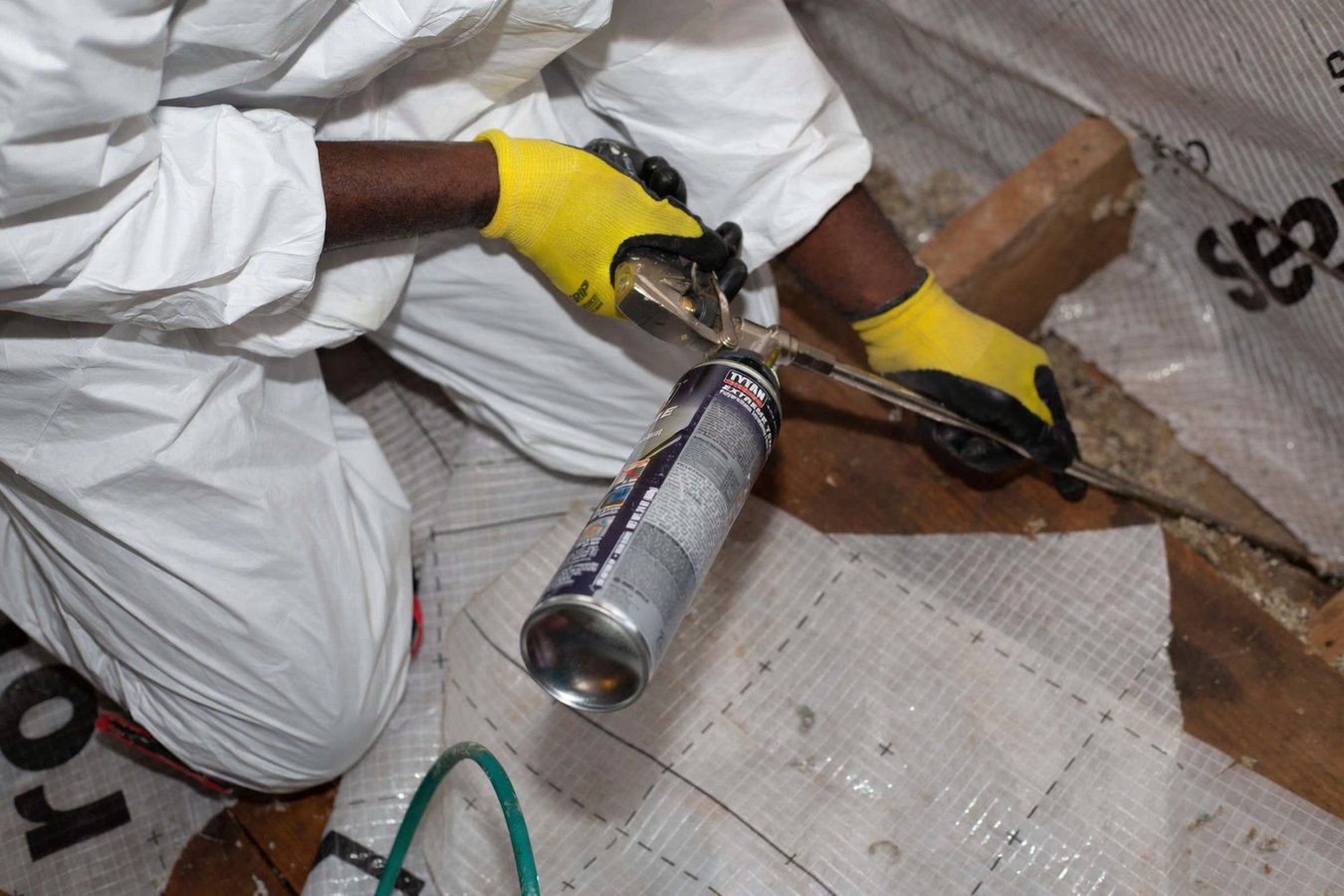
We pull any required LA County permits, complete the air sealing using low-expansion foam, fire-rated caulk, and metal flashing at penetrations, then add or top off insulation to the CZ14 minimum. You do not need to be home for most of the work after access is established.
At completion, we walk you through the work completed, confirm all penetrations are sealed and insulation depth is at spec, and provide documentation suitable for any future home sale disclosure or rebate application through Southern California Edison.
We respond to all Acton area inquiries within one business day. There is no obligation to proceed after the estimate visit. After you submit your request, we will contact you to schedule a convenient time to assess your property and discuss the scope and cost.
(661) 952-4736Spray polyurethane foam that expands into gaps to create an airtight thermal barrier in walls, roofs, and crawl spaces.
Learn moreAttic insulation upgrades that reduce heat transfer through the roof deck and keep indoor temperatures stable year-round.
Learn moreLoose-fill cellulose or fiberglass blown into attics and enclosed cavities for fast, even coverage without major demolition.
Learn moreWhole-home insulation assessments and installs addressing every area where conditioned air is lost.
Learn moreSafe extraction of old, damaged, or contaminated insulation before a new installation or remediation project.
Learn moreInsulation and encapsulation under the floor to prevent moisture intrusion and thermal loss from below.
Learn moreRetrofit and new-construction wall insulation that improves thermal performance and reduces outside noise.
Learn moreIdentification and sealing of air leaks around penetrations, rim joists, and top plates to tighten the building envelope.
Learn moreBasement wall and rim joist insulation that controls moisture and reduces heat loss in below-grade spaces.
Learn moreHigh-density closed-cell spray foam with a high R-value per inch, vapor resistance, and structural rigidity.
Learn moreSofter, lower-density open-cell foam ideal for interior walls, sound dampening, and attic applications.
Learn moreTargeted air sealing of the attic floor plane to stop conditioned air from escaping into unconditioned attic space.
Learn moreHeavy-duty poly sheeting installed on crawl space floors and walls to block ground moisture from entering the home.
Learn moreVapor retarder installation in walls, crawl spaces, and basements to manage moisture and prevent mold growth.
Learn moreInsulation added to existing homes without full demolition, using dense-pack or injection techniques.
Learn moreCommercial-grade insulation for warehouses, office buildings, and retail spaces to meet energy codes and reduce operating costs.
Learn moreServing these cities and communities.
Our crew serves Soledad Canyon properties regularly and knows what LA County building permits and CZ14 energy code requirements look like for your neighborhood.