Loading...
Serving Lancaster, CA and surrounding areas(661) 952-4736
Lancaster Insulation Company serves Castaic, CA with crawl space insulation, vapor barrier installation, attic upgrades, and spray foam for the community's owner-occupied family homes. Castaic sits just off Interstate 5 in northwestern Los Angeles County, about 40 miles north of downtown Los Angeles, with a hot-summer Mediterranean climate that pushes home cooling costs well above the state average in summer months. Our crew holds a valid California C-2 Insulation and Acoustical Contractor license and has completed insulation projects throughout the greater Santa Clarita Valley since 2022.
Castaic is an unincorporated census-designated place in the northwestern corner of Los Angeles County, positioned directly alongside Interstate 5 — the main freeway corridor connecting the LA metro to the Central Valley. With a 2020 Census population of 18,937 and a median household income of approximately $132,000, it is one of the more affluent unincorporated communities in LA County. About 82 percent of housing units are owner-occupied, and nearly 40 percent of households include children under 18, giving Castaic a distinctly family-oriented character that shows up in the way residents approach home maintenance and upgrades.
The community's defining landmark is Castaic Lake State Recreation Area, the largest State Water Project reservoir in Southern California. The lake is the reason most people outside the community associate the name Castaic with anything at all, and it provides fishing, boating, swimming, and hiking access year-round. Most Castaic residential neighborhoods sit in the hillside and valley terrain surrounding the lake and the I-5 interchange, with streets that run up into the dry chaparral hills on multiple sides.
Nearby Santa Clarita is just to the south and shares much of the same climate and housing stock character. Both communities fall within our regular service area along the I-5 corridor.
Most Castaic homes sit on slab-on-grade or shallow crawlspace foundations rather than full basements. An uninsulated crawl space floor assembly becomes a heat source in summer and a cold-air channel in winter, directly affecting the comfort of lower-level rooms and the load placed on HVAC equipment throughout the year.
Castaic's hillside terrain means some crawl spaces encounter seasonal ground moisture from drainage patterns on the slopes above. A properly installed Class I vapor barrier across the crawl space floor prevents that moisture from reaching floor joists and subfloor sheathing, where it causes long-term structural deterioration.
Castaic's summer highs regularly push above 100°F, and an under-insulated attic channels that heat directly into the living space. Newer Castaic developments built after 2010 are generally better insulated, but homes from the 1990s through the mid-2000s often sit below current California energy code minimums and benefit from an upgrade.
A reinforced vapor barrier sealed to the crawl space walls and piers is the foundation of any encapsulation system. California's 2022 Title 24 standards specify material class and seam requirements for unvented crawl space systems, and we install to those specifications on every permitted project.
Santa Clarita is just south of Castaic along the I-5 corridor and shares the same valley climate and housing stock profile. We schedule Santa Clarita and Castaic projects on the same routing day and are familiar with the property types throughout both communities.
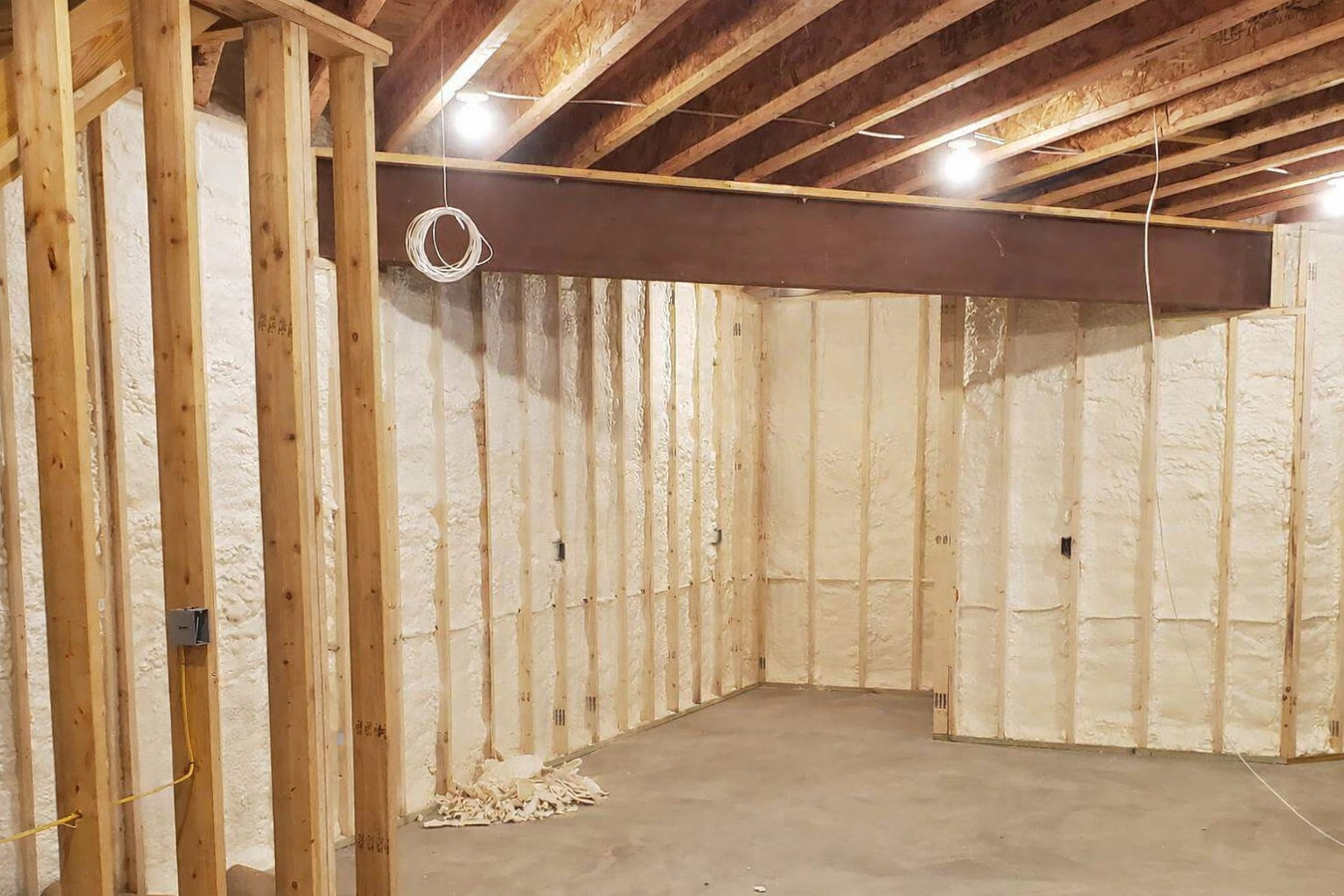
Closed-cell spray foam is the most effective option for rim joists and crawl space perimeter walls in Castaic, where air infiltration through foundation openings is a primary driver of both cooling and heating losses. It bonds directly to the foundation wall and doubles as an air barrier, eliminating the need for a separate sealing step.
Castaic has a hot-summer Mediterranean climate — the same Koppen Csa classification as much of the Santa Clarita Valley — where June through September routinely brings highs in the 90s and days that push over 100°F. Winters are mild by most standards but cool enough that heating costs are real, particularly in hillside homes that see more wind exposure. The combination means a home's thermal envelope is working against both extremes every year, and gaps in that envelope show up on utility bills every month.
The housing stock in Castaic spans a wider range than many nearby communities. Established hillside neighborhoods near Castaic Lake include homes built in the 1970s through 1990s that predate the current California energy code requirements. Newer developments — including a 137-home project recently approved along Sloan Canyon Road — bring more recently built structures where code compliance is current but where upgrades such as attic air sealing still add measurable value. That range of building vintage means no single approach fits all Castaic homes.
The area is also seismically active, and older homes in Castaic occasionally have foundation cracks or shifted framing that creates air infiltration pathways that were not present when the home was built. A thorough attic and crawl space assessment identifies these conditions before insulation is installed, so the thermal improvement is not undermined by air leakage that bypasses the new material.
With 82 percent owner-occupied housing and nearly 40 percent of households including children under 18, Castaic homeowners tend to be invested in their properties for the long term. Insulation upgrades that reduce monthly utility costs and improve comfort are straightforward investments in that context.
Castaic is unincorporated, which means permits for insulation work go through LA County Building and Safety rather than the City of Santa Clarita's building department — a detail that matters for project timeline and documentation. The Castaic Area Town Council, a 501(c)(3) advisory body that represents five geographic regions within the community, works with the LA County Board of Supervisors on land use and infrastructure decisions. Any permitted work in Castaic should be coordinated with county processes, not city ones.
The quickest route to most Castaic neighborhoods from our Lancaster base is via Interstate 5 south to the Castaic exits, roughly 30 to 35 minutes under typical conditions. We know which neighborhoods sit on the hillsides above the lake — where driveway grades and tight access can affect how equipment is positioned — and which are on the flat valley floor near the freeway, where access is straightforward. That difference matters for how we price and schedule a job.
Neighboring Quartz Hill and Lake Los Angeles are also within our service area. We cover all three communities regularly and can often schedule multiple nearby projects in the same service run.
Contact us by phone or through the online estimate form. We respond to all Castaic area inquiries within one business day and confirm a site visit time that fits your schedule, including weekend availability.
A technician visits your Castaic home, assesses the crawl space and attic conditions, measures square footage, and checks for any site-specific factors like hillside driveway access or tight crawl space clearance. The quote is provided in writing with no obligation and is specific to your home's conditions.
We pull any required LA County permits, complete the installation to California Title 24 specifications for this climate zone, and coordinate any required HERS inspection for permitted projects. Most single-day crawl space or attic jobs do not require the homeowner to vacate the property.
At the end of the project, we walk through the completed work, confirm insulation depths are at specification, and provide documentation you can use for a home sale disclosure, utility rebate application, or future energy audit. Southern California Edison serves Castaic and administers rebate programs that may offset a portion of the cost.
We respond to all Castaic area requests within one business day and carry no obligation. After you submit your information, we will reach out to schedule a convenient time to assess your home, walk through the scope, and provide a written quote specific to your property.
(661) 952-4736Spray polyurethane foam that expands into gaps to create an airtight thermal barrier in walls, roofs, and crawl spaces.
Learn moreAttic insulation upgrades that reduce heat transfer through the roof deck and keep indoor temperatures stable year-round.
Learn moreLoose-fill cellulose or fiberglass blown into attics and enclosed cavities for fast, even coverage without major demolition.
Learn moreWhole-home insulation assessments and installs addressing every area where conditioned air is lost.
Learn moreSafe extraction of old, damaged, or contaminated insulation before a new installation or remediation project.
Learn moreInsulation and encapsulation under the floor to prevent moisture intrusion and thermal loss from below.
Learn moreRetrofit and new-construction wall insulation that improves thermal performance and reduces outside noise.
Learn moreIdentification and sealing of air leaks around penetrations, rim joists, and top plates to tighten the building envelope.
Learn moreBasement wall and rim joist insulation that controls moisture and reduces heat loss in below-grade spaces.
Learn moreHigh-density closed-cell spray foam with a high R-value per inch, vapor resistance, and structural rigidity.
Learn moreSofter, lower-density open-cell foam ideal for interior walls, sound dampening, and attic applications.
Learn moreTargeted air sealing of the attic floor plane to stop conditioned air from escaping into unconditioned attic space.
Learn moreHeavy-duty poly sheeting installed on crawl space floors and walls to block ground moisture from entering the home.
Learn moreVapor retarder installation in walls, crawl spaces, and basements to manage moisture and prevent mold growth.
Learn moreInsulation added to existing homes without full demolition, using dense-pack or injection techniques.
Learn moreCommercial-grade insulation for warehouses, office buildings, and retail spaces to meet energy codes and reduce operating costs.
Learn moreServing these cities and communities.
Our crew knows the I-5 corridor communities and handles LA County permits for all insulation projects in Castaic, so your job stays compliant and on schedule.