
Loading...
Serving Lancaster, CA and surrounding areas(661) 952-4736
Lancaster Insulation Company serves Lake Los Angeles, CA with home insulation upgrades, blown-in attic work, and air sealing for the large-lot desert properties that define this community. Most homes here were built under energy codes that allowed attic insulation as low as R-11, leaving owners with bills that climb sharply every summer. The team holds a valid California C-2 insulation contractor license and responds within one business day.
Lake Los Angeles is an unincorporated census-designated place in the eastern Antelope Valley, sitting about 17 miles east of Palmdale on the Mojave Desert floor. The community was born from a 1967 real estate development that subdivided roughly 4,000 acres into 4,465 residential lots, marketed around an artificially filled desert lake that evaporated by the early 1980s. Today the dry lakebed remains a defining local landmark, and the street names chosen by those original developers — Biglake Avenue, Lakespring Avenue — still run through the neighborhood. The 2020 census counted 13,187 residents, with 72.5% of occupied housing units owner-occupied — one of the highest homeownership rates of any community in the Antelope Valley.
Properties here are genuinely rural in character. Half-acre to multi-acre lots are common, horse properties are spread throughout the area, and dirt roads still cut through some residential sections. Town Center Plaza serves as the community's commercial anchor and transit hub, connecting residents via Antelope Valley Transit Authority routes to Lancaster and Palmdale. The community has an average household size of 3.62 — well above the national average — meaning homes here are actively lived in by families with real daily comfort needs.
Nearby Palmdale shares the same high-desert climate, and we serve homeowners across both communities. Further east, the open desert terrain continues toward California City and the broader Mojave, making the Antelope Valley corridor the core of our service area.
The large ranch-style and split-level homes common on Lake Los Angeles's subdivided lots were typically built with minimal attic insulation and no wall cavity treatment. A full home insulation assessment covers all zones — attic, walls, and floor assemblies — so the upgrade addresses the whole thermal envelope, not just the easiest access point.
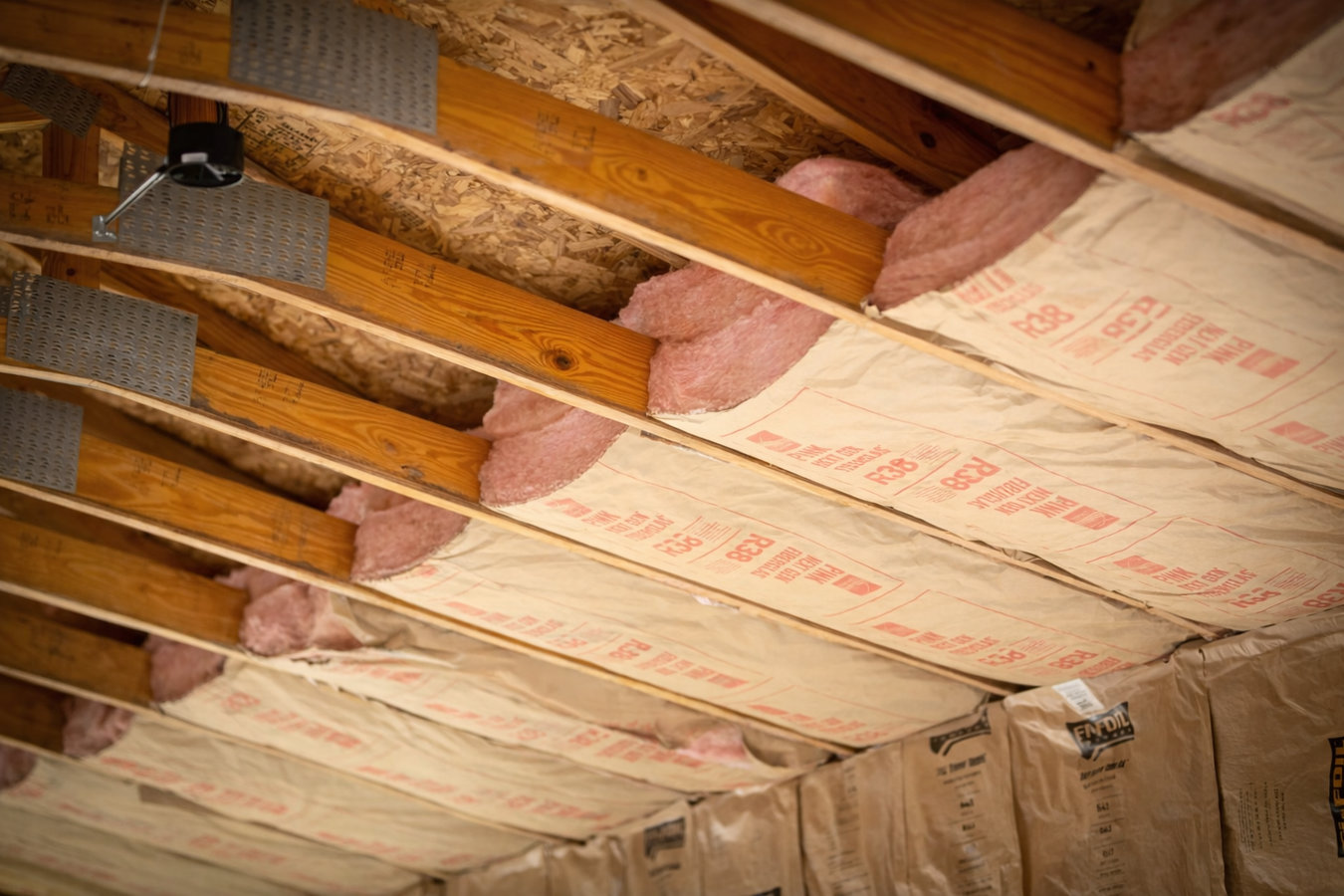
Blown-in loose-fill is the most practical attic solution for the finished ceilings found in most Lake Los Angeles homes. Cellulose and fiberglass both conform to irregular framing and fill around obstacles without requiring drywall removal. For a home at R-11 to R-19 original insulation, a single blown-in visit can bring the attic up to Zone 14's R-38 minimum.
Lake Los Angeles sits on the desert floor with no terrain to break the wind. High-desert gusts push hot air directly through gaps at top plates, attic hatches, and recessed lighting common in this area's older construction. Sealing those pathways before adding insulation keeps the new material performing at its rated R-value rather than allowing air bypass to undercut it.
Many horse properties and equestrian setups in Lake Los Angeles have tack rooms, feed storage, and workshop buildings that were never insulated. Closed-cell spray foam handles irregular framing and weathered wood substrates common in these outbuildings, sealing and insulating in a single application.
Homes built during the original 1960s Lake Los Angeles land development may have insulation material that has degraded over six decades of desert heat cycling. When existing material is compressed, rodent-damaged, or contaminated with accumulated desert dust, removal gives new insulation a clean substrate and a reliable starting depth.
Palmdale is 17 miles west of Lake Los Angeles and shares the same Climate Zone 14 conditions. We route between the two communities regularly, and homeowners in Palmdale benefit from the same attic, wall, and air sealing upgrades as their neighbors further east in the Antelope Valley.
The original 4,465 lots laid out by developers in 1967 were designed around a marketing vision of a lakeside resort town, not an energy-efficient housing stock. Homes built on those lots in the late 1960s and through the 1970s predate California's Title 24 energy code entirely. Even homes added later, through the 1980s and into the 1990s, were built to early Title 24 standards that allowed attic insulation as low as R-19 in this zone. That is less than half the R-38 minimum currently recommended for Climate Zone 14.
The western Mojave Desert climate hits Lake Los Angeles with temperature swings that coastal California homeowners never experience. Summer days regularly exceed 100°F while winter nights drop near freezing, with little humidity to moderate either extreme. Attic spaces in under-insulated homes reach 140°F or higher in July, pushing heat through ceilings with nothing but a thin layer of aging fiberglass to slow it down. That thermal load forces air conditioning to run longer cycles, and families with 3.62 people per household — the community average — feel those bills every month.
Large lots also mean larger exterior wall areas and more unconditioned attached structures — garages, storage buildings, and horse facilities — that share walls with living spaces or make the overall envelope harder to control. Addressing home insulation here requires an assessment that accounts for the full property footprint, not just the main living area.
Because Lake Los Angeles is unincorporated, permit-required insulation work is handled through the Los Angeles County Department of Building and Safety rather than a city building office. That distinction matters for customers in this community who have been told by other contractors that a permit is not necessary for their scope of work — the county's requirements differ from Lancaster's city codes, and we pull from the correct authority every time.
The drive out to Lake Los Angeles from Lancaster runs east on Avenue J or Avenue K, past the open desert terrain toward Town Center Plaza. Working on properties along Biglake Avenue and in the sections near the dry lakebed, we regularly encounter homes with original 1960s framing that sits wider than modern stud spacing — an attic framing pattern that requires adjusting batt widths or defaulting to blown-in material rather than trying to fit standard pre-cut batts. That is a detail a first-time visitor to this area would not know to expect.
Homeowners who want a broader picture of insulation options in the region can also look at what their neighbors in Littlerock and Rosamond are dealing with — both communities face the same desert climate and similarly aged housing stock.
Reach us by phone at (661) 952-4736 or through the online estimate form. We respond within one business day — no waiting a week for a callback.
We visit your Lake Los Angeles property, measure attic depth, check wall cavity conditions, and identify air sealing gaps. You receive a written quote before any work starts — no obligation to proceed, no pressure.
Most blown-in attic jobs in this area are completed in a single visit. You do not need to be home for the attic work itself, though we recommend being available at the start so we can walk through the access points together.
After installation, we verify depth and coverage, walk you through what was done, and provide the documentation needed for any Southern California Edison rebate or federal 25C tax credit claim you may be eligible for.
We respond within one business day — no voicemail loops, no waiting a week. Submitting the form puts you in touch directly with the crew that will do the work in Lake Los Angeles. The estimate is free, there is no obligation, and you will have a written quote before we ask for anything.
(661) 952-4736Spray polyurethane foam that expands into gaps to create an airtight thermal barrier in walls, roofs, and crawl spaces.
Learn moreAttic insulation upgrades that reduce heat transfer through the roof deck and keep indoor temperatures stable year-round.
Learn moreLoose-fill cellulose or fiberglass blown into attics and enclosed cavities for fast, even coverage without major demolition.
Learn moreWhole-home insulation assessments and installs addressing every area where conditioned air is lost.
Learn moreSafe extraction of old, damaged, or contaminated insulation before a new installation or remediation project.
Learn moreInsulation and encapsulation under the floor to prevent moisture intrusion and thermal loss from below.
Learn moreRetrofit and new-construction wall insulation that improves thermal performance and reduces outside noise.
Learn moreIdentification and sealing of air leaks around penetrations, rim joists, and top plates to tighten the building envelope.
Learn moreBasement wall and rim joist insulation that controls moisture and reduces heat loss in below-grade spaces.
Learn moreHigh-density closed-cell spray foam with a high R-value per inch, vapor resistance, and structural rigidity.
Learn moreSofter, lower-density open-cell foam ideal for interior walls, sound dampening, and attic applications.
Learn moreTargeted air sealing of the attic floor plane to stop conditioned air from escaping into unconditioned attic space.
Learn moreHeavy-duty poly sheeting installed on crawl space floors and walls to block ground moisture from entering the home.
Learn moreVapor retarder installation in walls, crawl spaces, and basements to manage moisture and prevent mold growth.
Learn moreInsulation added to existing homes without full demolition, using dense-pack or injection techniques.
Learn moreCommercial-grade insulation for warehouses, office buildings, and retail spaces to meet energy codes and reduce operating costs.
Learn moreServing these cities and communities.
Call or submit an estimate request and we will get back to you within one business day — licensed, local, and ready to work.